Renal Failure
Renal Failure
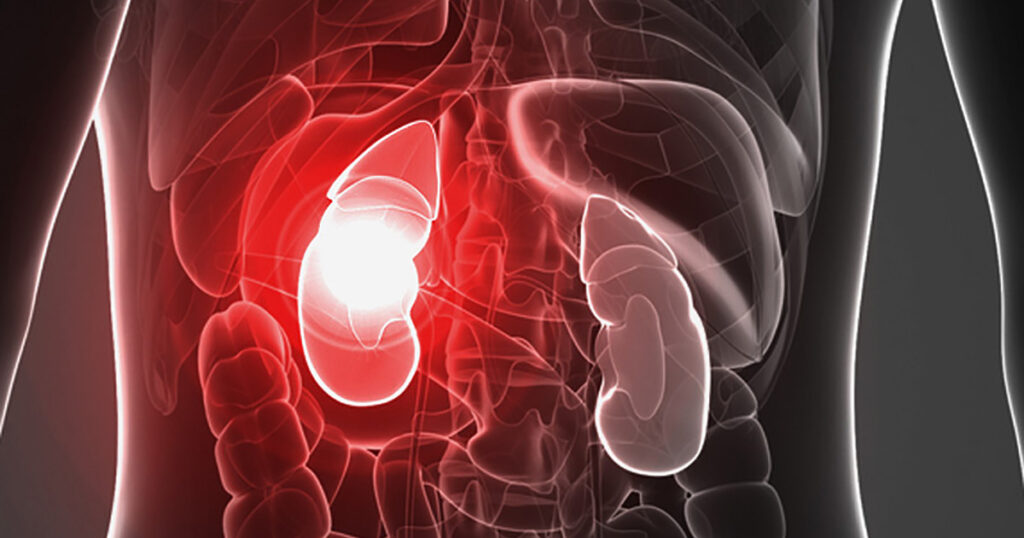
Renal failure occurs when one or both kidneys can no longer perform normal functions. The development of kidney failure might be sudden and transitory ( Acute ) or the one that deteriorates gradually( Chronic).
Acute Renal Failure
The abrupt or unexpected cessation of renal functioning is known as acute renal failure. It can be reversed in a few days.Acute renal failure may cause the body to experience life-threatening reactions that require immediate medical attention suddenly.
Symptoms
- Decreased urine output
- At times complete stoppage of the passage of urine
- Swelling in legs, ankles, and feet.
- Coma
Chronic Renal Failure
The persistent, long-term, and irreversible weakening of renal functioning is known as chronic renal failure.
The undamaged nephrons can make up for the function lost by some of the nephrons. However, chronic renal failure develops as more and more nephrons begin to lose their ability to function over months or years because the compensatory mechanism fails.
Symptoms
- Severe fatigue: You feel tired all the time. A hormone called erythropoietin is produced by healthy kidneys. Less Erythropoietin is produced as the kidneys age and fail. Your muscles and brain soon become fatigued because there are fewer red blood cells to deliver oxygen.
- Shortness of breath: Two ways of having trouble breathing may be linked to your kidneys. Initially, the lungs may get overfilled with additional bodily fluid. And second, anaemia (a deficiency in red blood cells that carry oxygen) can deprive your body of oxygen and make you feel out of breath.
- Feeling dizzy, and fainting also at times: Your brain does not get enough oxygen if you have anaemia associated with kidney failure. Feeling weak, lightheaded, or dizzy can result from this.
- Swelling in the hands and feet: Swelling in the legs, ankles, feet, and/or hands is a result of the body’s inability to eliminate excess fluid due to failing kidneys.
- Puffiness on the face, especially around the eyes: Lack of fluid removal by failing kidneys leads to a buildup of excess fluid in the body and facial oedema.
- Stomach upset, nausea, and vomiting: Vomiting and nausea can also be brought on by a substantial buildup of waste products in the blood (uremia). Weight loss may result from a decrease in appetite.
- Seizures or comas may result in severe cases.
What are the causes of Renal Failure?
Hypertension and Diabetes are the main reasons for kidney failure.
- Diabetes: Your kidneys’ filters are harmed by having too much glucose, often known as sugar, in your blood. Your kidneys may suffer extensive damage over time, making it difficult for them to effectively filter waste products and surplus fluid from your blood..
- Hypertension: Kidney blood vessels can be damaged by high blood pressure, which will affect how well the kidneys function. Your kidneys’ ability to eliminate waste and extra fluid from your body may be compromised if the blood vessels inside of them are damaged. A dangerous cycle may then be created by extra fluid in the blood arteries, which would further increase blood pressure.
- Polycystic disease (PKD). A disorder called polycystic kidney disease (PKD) is a genetic condition that develops cysts inside the kidneys.
- Lupus: An autoimmune condition called lupus has been linked to organ damage, joint pain, fever, and skin rashes.
Treatment
A hospital stay is mostly necessary for the treatment of acute renal failure. The majority of patients with acute renal failure are already in a hospital. Your acute renal failure’s underlying cause and how quickly your kidneys recover will determine how long you’ll need to stay in the hospital.
Your doctor will take steps to avoid problems and give your kidneys time to recover. Among the therapies that lessen problems are:
Therapies to balance the fluid levels in your blood: Your doctor could advise intravenous (IV) fluids if your acute kidney failure is brought on by a deficiency of fluid in your blood. At times, acute renal failure might result in you having too much fluid, which will cause your arms and legs to bulge. To encourage your body to flush out additional fluids in these circumstances, your doctor may prescribe drugs called diuretics.
Medications that lower blood potassium levels: Your doctor may advise calcium, glucose, or sodium polystyrene sulfonate to avoid the buildup of high levels of potassium in your blood if your kidneys aren’t effectively filtering potassium from your blood. Muscle weakness and dangerously irregular heartbeats (arrhythmias) can both result from an excess of potassium in the blood.
Medications to raise the calcium levels in the blood: Your doctor might advise a calcium infusion if the calcium levels in your blood become too low.
Dialysis: Toxins are removed from your blood by dialysis. If toxins accumulate in your blood, you could require short-term hemodialysis, often known as dialysis, to assist your body to rid itself of toxins and extra fluids while your kidneys recover. Your body may be able to lose extra potassium with the aid of dialysis. A machine that filters waste through an artificial kidney pumps blood out of your body during dialysis. Your body then receives the blood back.
Dialysis can get your blood clean of contaminants. If toxins accumulate in your blood, you could require short-term hemodialysis, often known as dialysis, to assist your body to rid itself of toxins and extra fluids while your kidneys recover. Your body may be able to lose extra potassium with the aid of dialysis. A machine that filters waste through an artificial kidney (dialyzer) pumps blood out of your body during dialysis. Your body then receives the blood back. You might also need to adhere to a low-potassium, low-salt diet in addition to dialysis and reducing alcohol consumption.
Some common myths about kidney disease
Myth: Kidney illness is rare
Fact: The prevalence of kidney disease among Indians is 17 per 100. Kidney disease-related mortality in India has doubled during the past 15 years.
Myth: Kidney disease cannot be prevented
Fact: The common belief is that kidney illness is inherited, making it uncontrollable. Yet, kidney disease is typically a disease that may be avoided.
Controlling blood pressure is one of the main preventative measures that lower the risk of kidney disease in adults. You can do this by eating less salt, drinking less alcohol, losing weight, or engaging in regular exercise.
Myth: Kidney Disease Is Caused by Kidney Stones
Fact: Although kidney stones are unpleasant, they do not cause renal damage. It is quite uncommon for kidney stones to permanently harm the kidneys. Yet, there is a potential that kidney disease may become more likely if the patient does not change their lifestyle to stop kidney stones from developing, even if this risk will not only be caused by the recurrence of kidney stones.
Renal Failure Treatment - Dr Manish Wadhwani's Clinic, Kailash Colony, Ulhasnagar
Dr. Manish Wadhwani's Clinic at Kailash Colony, Ulhasnagar team is the best place to get your Renal Failure Treatment.
Service Type: Physician, Diabetologist and Clinical Cardiologist Services